
One of the procedures that is considered to be of the utmost significance in the oil and gas industry is known as "well logging."This process is what is responsible for providing necessary information regarding the geology of the subsurface, the fluid content, and the characteristics of the reservoir. In order to determine the values of a variety of the rock formations' physical characteristics, it is necessary to use specialized equipment and sensors. This is necessary because it is necessary to ascertain the values of these characteristics. The data that is collected during the process of well logging can be used by geoscientists and engineers to obtain the information that they require in order to make educated decisions regarding drilling and production operations. However, acquiring data from logged wells can be a time-consuming and expensive process. It is typically difficult to understand the data that is collected, and it takes a high level of analytical expertise to effectively interpret and visualize this data. At this stage, the application of well logging simulators is where things get interesting. The use of these simulators offers a method that is not only effective but also efficient for training personnel, evaluating equipment, and testing a variety of exploration scenarios.
In the following section, we will provide an in-depth analysis of well logging simulators, during which we will discuss topics such as the technology that underpins these simulators, the applications they have, and the directions they are headed in the near future.
The Science and Engineering That Goes Into Making Well Logging Simulation Software
Simulators for well logging are a type of software that models the physical characteristics of subsurface formations and simulates the measurements that are obtained by logging tools. Well logging simulators can also be used to train logging tool operators. They achieve this by developing a virtual environment with the assistance of intricate algorithms and numerical models. This gives them the ability to provide a representation of the logging process that is both accurate and realistic. The simulation of the interactions that take place between the rock formations and the logging tools is what makes this possible. There is a wide variety of well logging simulators to choose from, ranging from straightforward 2D models to intricate 3D models that feature an assortment of logging tools as well as distinct tiers of the geological formation. Other simulators provide users with access to a wider variety of logging tools and strategies, in contrast to those simulators that are designed specifically for particular types of logging processes, such as nuclear or acoustic logging. For instance, the design of certain simulators takes into account specific logging procedures in order to provide a more accurate experience.
-
The capability of well logging simulators to generate virtual wells and subsurface models that faithfully depict the geology of the reservoir as well as its fluid content is one of the most important aspects of these programs
-
Another important facet of these programs is the ability of these simulators to analyze data from real wells
-
The capability of these simulators to analyze data taken from actual wells is another important aspect of them
-
In order to construct accurate models of the subsurface, well logging simulators draw upon an extensive range of data sources
-
These various types of geological data include logs from wells, seismic data, core data, and other types of geological data
-
After this stage, the subsequent steps involve modeling and simulating, with the assistance of the subsurface models, the interactions of the logging tools with the subsurface formations
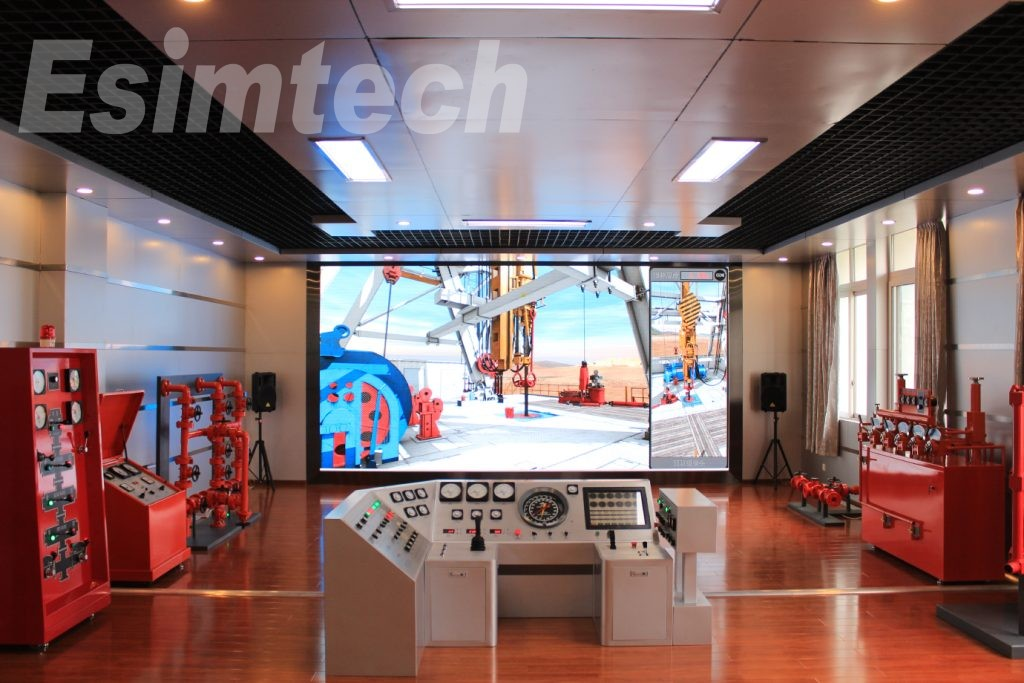
Users also have access to a variety of visualization tools when they use well logging simulators, which is another benefit. Users are able to visualize and manipulate a variety of geological scenarios using these tools. Additionally, users are able to alter logging parameters and observe the effects of these changes on the data that was measured. Tools that can be used for visualization include displays of geological models in two dimensions or three dimensions, well logs, and cross-sections, to name just a few examples of these types of tools. A feature known as real-time data visualization, which is offered by some simulators but not by others, enables users to monitor and evaluate data relating to well logging in real time as it is being collected. This capability can be found in some but not all simulators.
Some Illustrations of How Effectively Logging Simulators Can Be Employed in the Training and Certification of Personnel
The utilization of well logging simulator enables the training and certification of personnel to take place in an environment that is both safe and under control. This is made possible by the environment's being under both of those conditions. It is possible for personnel to learn and practice well logging techniques within an environment that is both safe and controlled, thereby eliminating the possibility of accidents or injuries occurring. This is made possible by the fact that the environment can be both safe and controlled. With the assistance of simulators for well logging, it is also possible to evaluate the performance of personnel and to determine the areas in which they need additional training.
An Evaluation of the Different Gadgets and Tools That Can Be Obtained
A number of different equipment configurations and testing scenarios can be evaluated with the help of well logging simulators, eliminating the need for costly field trials and potentially resulting in significant cost savings. If a piece of equipment is put through simulation testing before it is used by a company, the company will be able to identify potentially problematic aspects of the equipment and make any adjustments that are necessary before sending the equipment out into the field to be used. It's possible that doing this will result in cost and time savings, in addition to lowering the likelihood of making mistakes that could end up costing a lot of money.
The Execution of Various Exploration Scenarios and Evaluation of Their Effectiveness
The use of well logging simulators enables the testing of various exploration scenarios, as well as the evaluation of the viability and profitability of various drilling and production endeavors. This is made possible thanks to the fact that these simulators can replicate real-world conditions. This is accomplished by performing tests using a variety of different exploration scenarios. Businesses are able to determine potential drilling targets, optimize well placement and completion strategies, and improve overall production by simulating a number of different geological scenarios and logging parameters. This allows the businesses to improve overall production. This has the potential to increase both the profitability and the productivity of drilling and production operations at the same time.
The recording of wells and the examination of the information gathered from them
One is able to carry out responsibilities such as conducting an analysis of the data obtained from well logging and locating measurement errors and uncertainties with the assistance of well logging simulators. The operators are able to identify inconsistencies in the actual well logging data by first simulating the logging process and then comparing the results of the simulation to the actual data. By emulating the process of logging, it is possible to discover inconsistencies. This can result in the data obtained from the well logging being more accurate and reliable, which is essential for gaining the knowledge necessary to make educated decisions regarding drilling and production operations.